1. Introduction
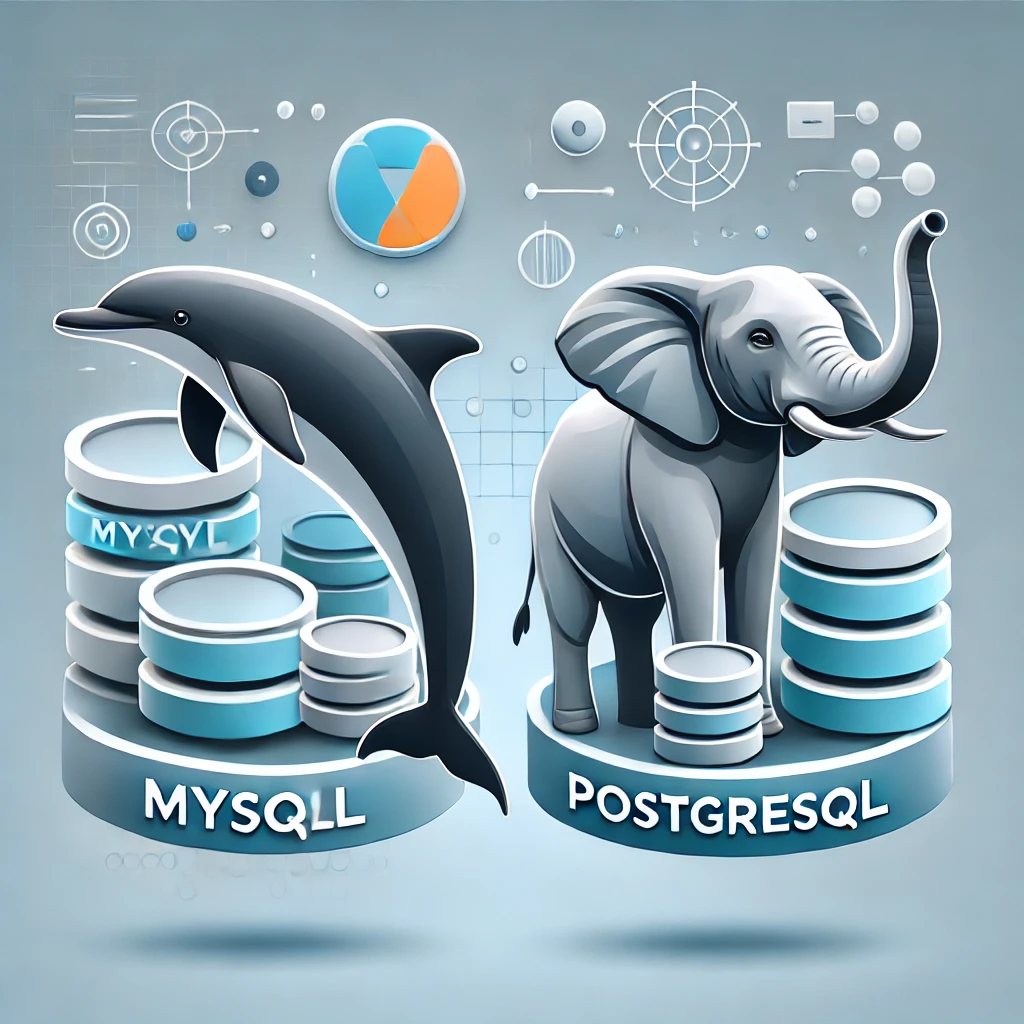
Choosing a database is a critically important decision in modern application development. Among the available options, “MySQL” and “PostgreSQL” are the most widely used open-source relational database management systems (RDBMS). However, which one you should choose depends on the size and requirements of your project. In this article, we clearly explain the differences between MySQL and PostgreSQL and help you make an informed decision by understanding their respective characteristics.
2. Basic Differences Between MySQL and PostgreSQL
Overview of MySQL
MySQL is a fast and lightweight RDBMS primarily optimized for web applications. It is widely adopted in small to medium-sized projects, blogs, and e-commerce websites. Thanks to its simple design and excellent performance, it is easy for beginners to use. In addition, commercial support is available, allowing usage under both free and paid editions.
Overview of PostgreSQL
PostgreSQL is an object-relational database management system (ORDBMS) with more advanced features compared to MySQL. It is well suited for projects that require handling large datasets and complex query processing, and it has been adopted in large-scale systems such as Yahoo! and Facebook. Despite being open source, it is fully available for commercial use and comes with minimal licensing restrictions, which is one of its major advantages.
3. Feature Comparison
ACID Compliance and Transaction Management
PostgreSQL satisfies ACID compliance by default and provides strong transaction processing and concurrency control. This ensures data integrity while enabling advanced operations. On the other hand, MySQL also offers ACID-compliant storage engines, but not all storage engines support it. For example, the MySQL MyISAM engine does not support ACID.
Extensibility and Extensions
PostgreSQL offers highly flexible extensibility. By adding extensions such as PostGIS, it can efficiently handle Geographic Information System (GIS) data. It also allows easy addition of custom data types, making it suitable for complex data processing and application development. While MySQL supports multiple storage engines and provides sufficient functionality for general web applications, its extensibility is not as powerful as PostgreSQL.
4. Performance and Scalability
Performance of MySQL
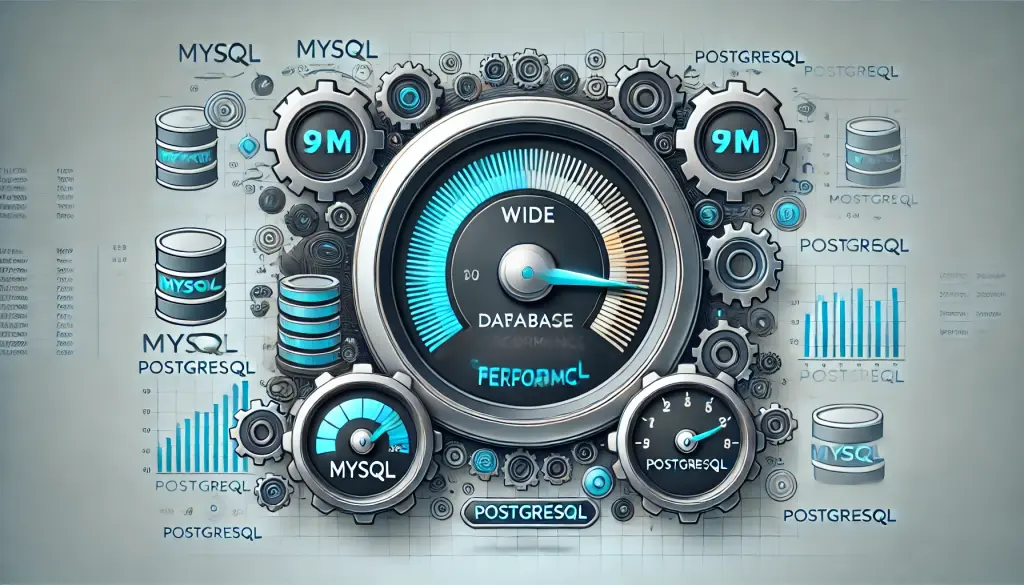
Due to its simple architecture, MySQL excels particularly in read performance. It performs very well in small to medium-sized web applications and e-commerce sites where read operations are dominant. For this reason, it is commonly used in content management systems such as WordPress.
Performance of PostgreSQL
PostgreSQL demonstrates strong performance in complex transactions and large-scale datasets. It is especially suitable for applications that require high concurrency and strict ACID compliance. While it maintains high performance for complex query processing, it can be slightly slower than MySQL in simple read operations.
5. Backup and Recovery
Backup and Recovery in MySQL
MySQL provides basic backup and recovery features that are fully usable even in the free edition. However, support for the free edition is community-based, whereas the paid edition offers 24/7 support. For this reason, the paid edition is often selected for commercial use.
Backup and Recovery in PostgreSQL
PostgreSQL includes backup functionality based on Write-Ahead Logging (WAL) and supports online backups as well as Point-In-Time Recovery (PITR). This enables system restoration while minimizing the risk of data loss.
6. Differences in Use Cases
Use Cases Suitable for MySQL
Thanks to its lightweight and high-speed characteristics, MySQL is suitable for small to medium-sized web applications, blogs, and e-commerce sites. It is particularly ideal for systems where simple data manipulation and read operations are the main focus.
Use Cases Suitable for PostgreSQL
PostgreSQL is well suited for systems that handle complex data operations and large-scale datasets. In financial institutions, government agencies, and large enterprise systems, PostgreSQL’s advanced functionality and flexibility are highly valuable. Additionally, by leveraging PostGIS, it can support Geographic Information Systems (GIS), making it widely used in infrastructure-related systems.
7. Conclusion
MySQL and PostgreSQL each have distinct characteristics, and the choice between them depends on your project’s needs. If you require a simple and lightweight system, MySQL is appropriate. If you need complex data operations and scalability, PostgreSQL is the better choice. Selecting the optimal database according to your project’s requirements is key to success.